

I found $12 Bottega and a 100-year-old desk for $35. Here’s how to do the same.
Save this list.
Hi Geezers,
If you are just tuning in, we’re doing a secondhand shopping series for the paid subscribers. Want to be a paid subscriber? I am giving you a little deal today!
I go to thrift stores multiple times a week. Sometimes I buy nothing. Sometimes I somehow leave with a 100-year-old chair, a portrait of two strangers and a giant marble head of the Virgin Mary. Such is life.
But because I do this so often, I’ve realized I have a mental list of categories I check almost every single time. Not because I automatically buy them, and not because they’re necessarily “valuable,” but because I’ve learned that these are the places where I personally find the best stuff.
This is also why I don’t really believe in walking into a thrift store with an extremely specific shopping list. I’m not usually thinking, “Today I need a vase.” I’m looking for the kinds of things I know are worth stopping for, and then deciding whether the particular thing in front of me deserves to come home.
You can apply the lessons here for any of these categories:

So, after ten years and hundreds and hundreds of thrift-store and estate sale visits: these are the things, or well, categories I always keep an eye out for. Soon we can go one by one to talk about brands, value, etc. But not yet.
OKAY.
Let’s get into it.

Nostalgia ANYTHING (for me or for someone else — if they want it!)
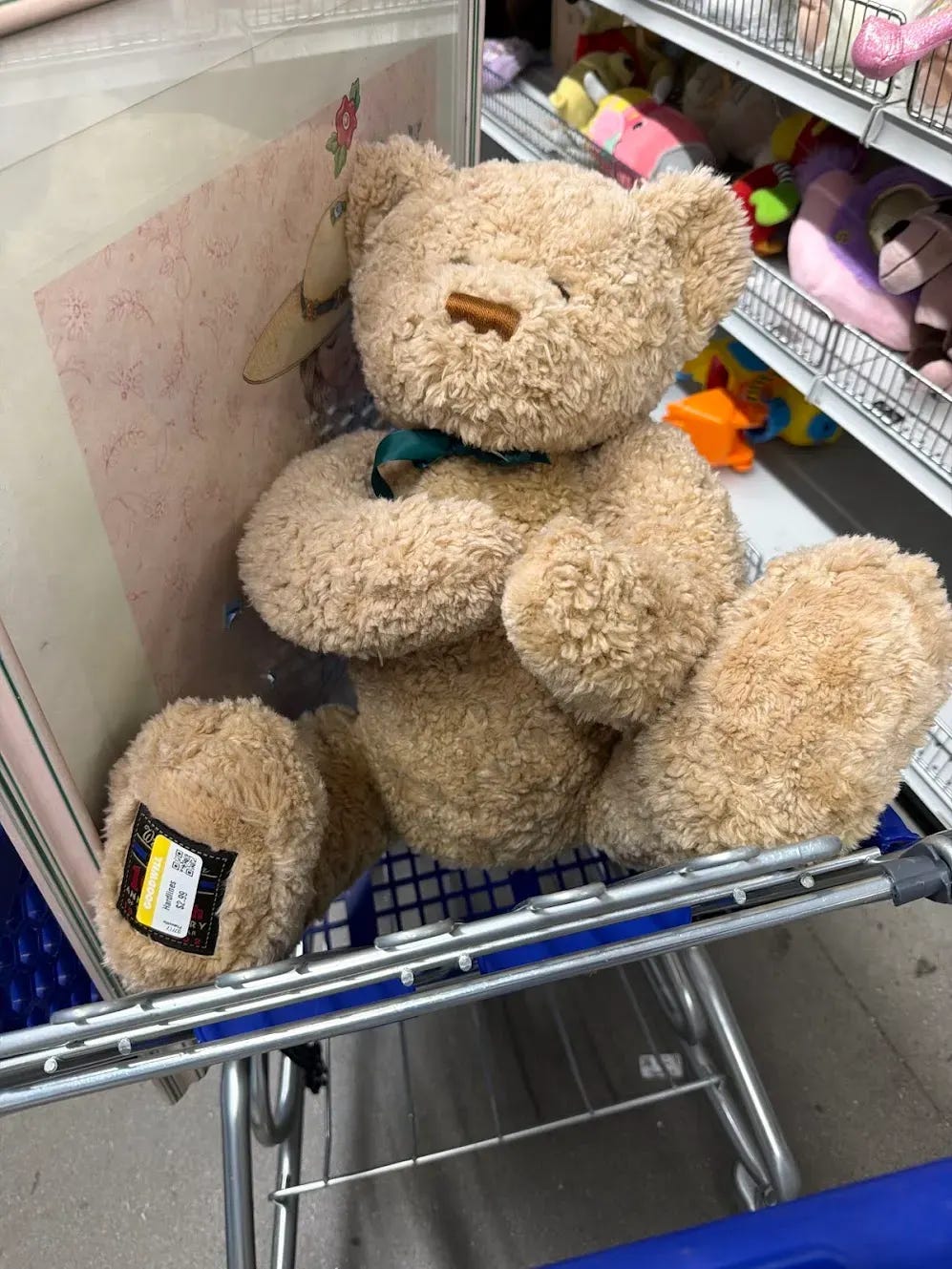
I am talking about the Samantha poster. Vintage teddy bears. Old Pleasant Company. Wooden toys. Doll furniture. Illustrated children’s books. Puzzles. Old school supplies. Anything that makes some deeply dormant part of my brain go OH MY GOD.
This is NOT necessarily the same thing as buying collectibles because I do not know what every American Girl item is worth. I am not trying to become an expert in 1988 Fisher-Price. I don’t necessarily care if something has its box or is in brand new condition.
I just think nostalgia is one of the few categories where you know almost instantly whether something is special to you, specifically. You either see it and feel absolutely nothing or suddenly you are nine years old again.
And when the latter happens, I stop. This is also a crucial time to deploy the big question from this post; the one I didn’t ask myself for years and years but that now saves me tons of money and space. It’s the difference between finding, like, a Molly American Girl Doll and one of those abacuses from the doctor’s office. And it may be the opposite for you! But I always look and check. Sometimes the dopamine hit is just enough.

Anything from a museum, hotel, restaurant or other institution
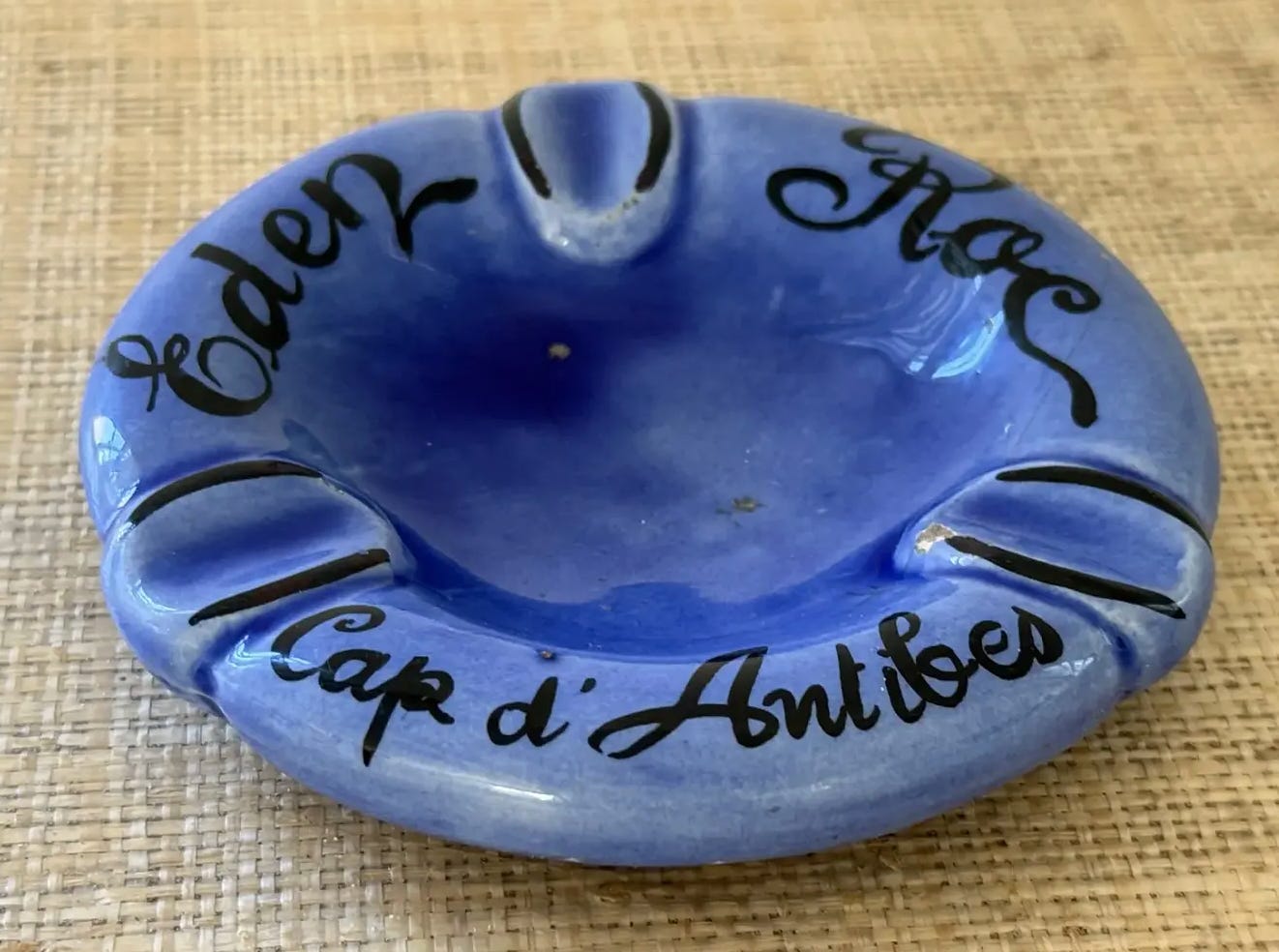
THIS is such a good one.
Museum gift-shop objects. Hotel ashtrays. Old restaurant plates. Glasses with logos. Club silverware. Commemorative objects. Things from universities, resorts, department stores, historic houses, random societies I have never heard of. Basically: if the object has evidence that it originally came from SOMEWHERE, I want to know more.
My giant Virgin Mary head is obviously the best recent example. Finding an authorized Met and Vatican Museums reproduction of Michelangelo’s Pietà at a thrift store is exactly why I thrift.
Did I wake up that morning needing a giant head of the Virgin Mary? No. Did I know such a thing was even available for purchase? Also no.
But suddenly there she was!

Art (especially if it’s signed)
I will always stop for art, or better yet, signed art. I do not care if I recognize the artist, and most of the time I absolutely do not. If there is a signature, a number, a date, or anything else that tells me this was made by an actual person and not mass-produced for HomeGoods, I am looking closer.
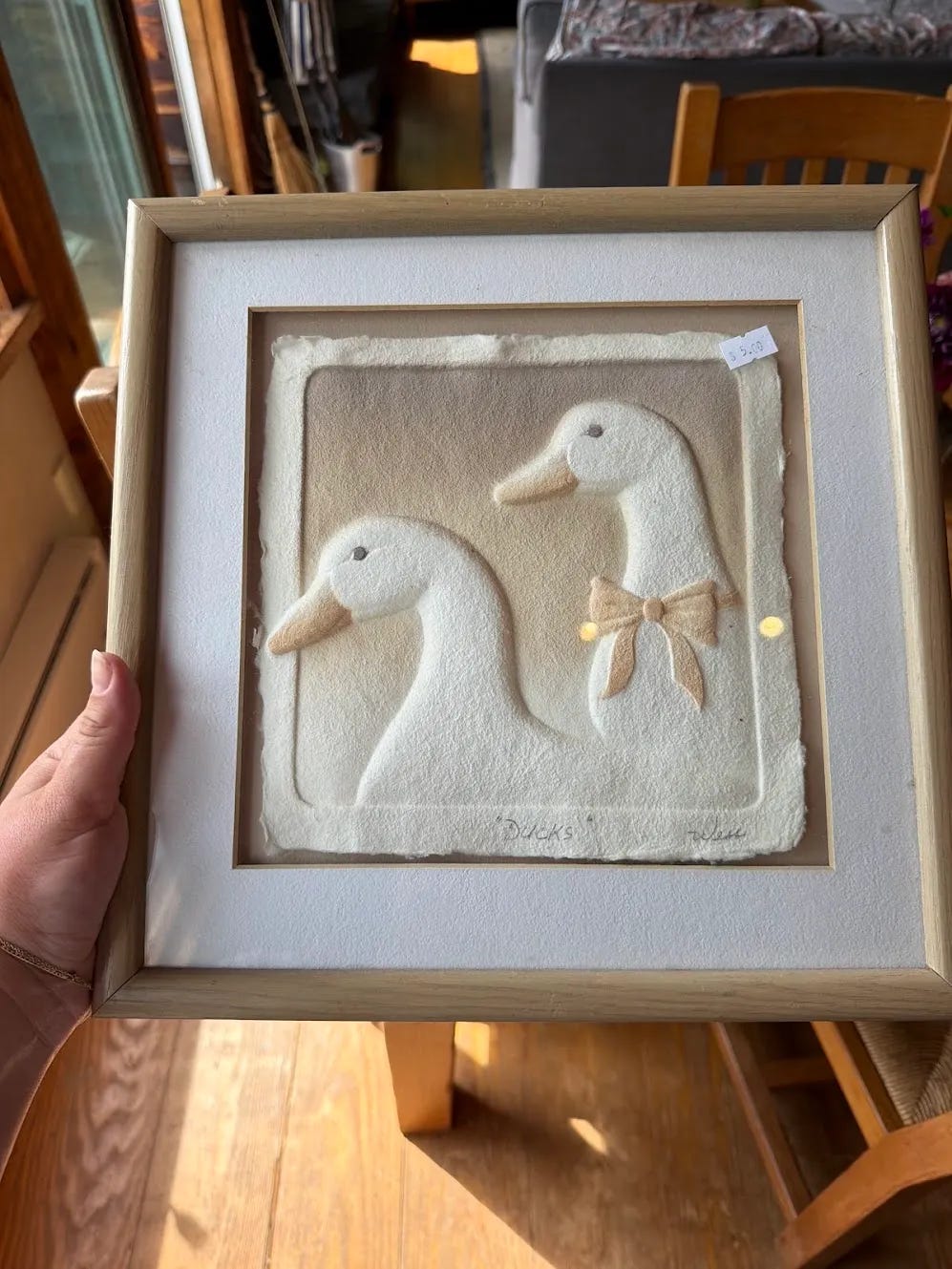
One of my friends has made hundreds of dollars reselling the most RANDOM signed and numbered prints on Facebook Marketplace, which really changed how I look at this category. I am not saying every signed piece is valuable, because obviously it is not, but it gives me a reason to investigate. And even if the art itself ends up being worth nothing, sometimes the frame alone is worth more than the $4.99 they are asking for the whole thing.

This is where we get into the stuff I check so automatically at this point that I barely realize I’m doing it: the fabric-content tag that can make me completely reconsider something I was about to walk past, the $3–$7 thing I basically never buy new anymore because thrift stores are full of them, the section that led me to a 100+ year-old chair for $7, and the category I’m quietly stockpiling for all of the dinner parties I plan to host in the house I still do not own.
Plus: the one entire section of the thrift store I almost always skip, even though I KNOW people regularly find things worth hundreds of dollars there.
If you want to get better at walking into a thrift store and quickly finding the good, interesting stuff among the junk and crap, keep reading!